

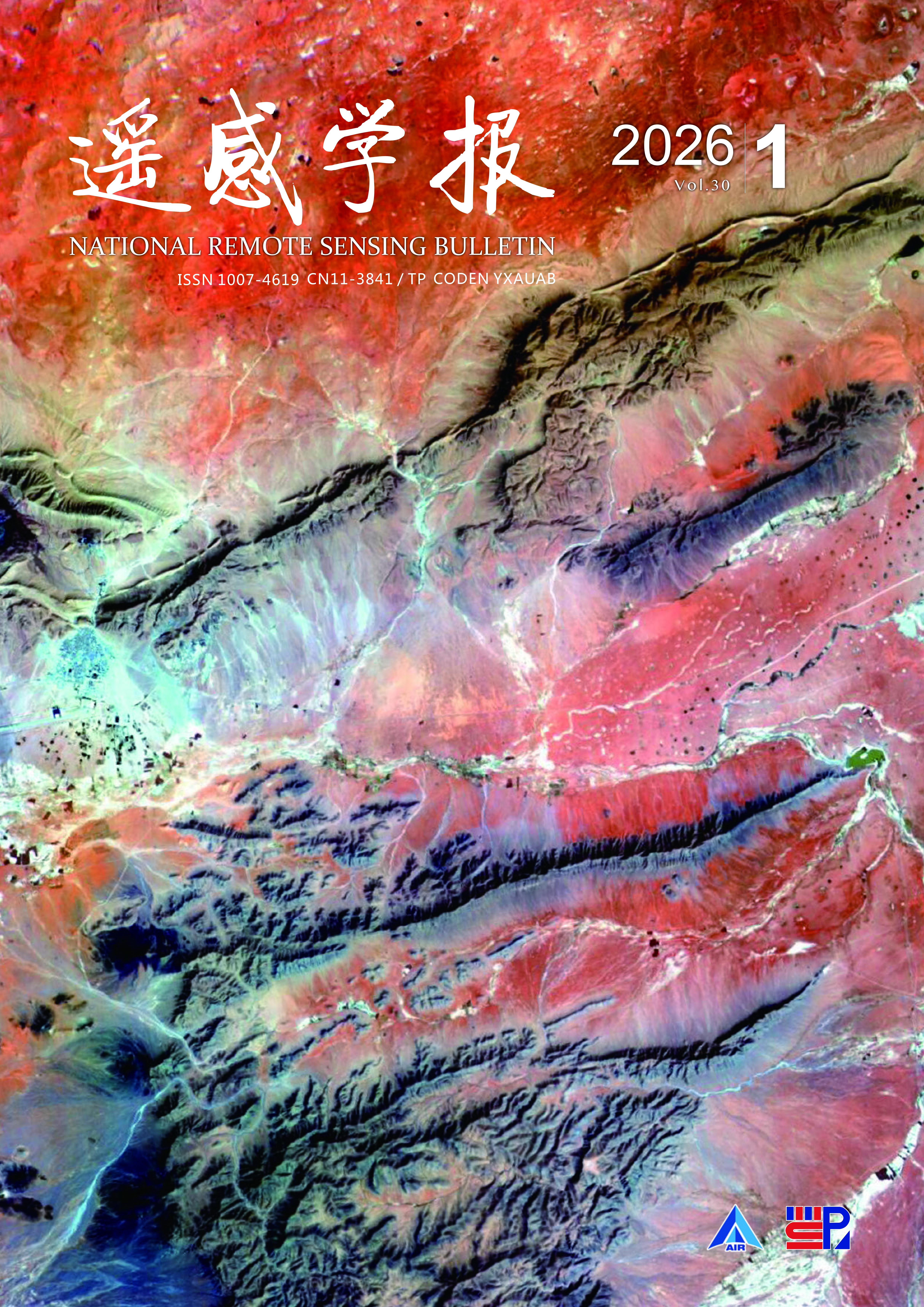


Issue Ebookcover storyIssue Cover
Latest Issue
Online FirstList of IssuesDocument Types
2016
2015
Issue 6
Issue 5
Issue 4
Issue 3
Issue 2
Issue 1
2014
2013
2012
2011
2010
2009
2008
2007
- Abstract:Monitoring crop condition can provide near real-time information on crop growth and reflect diverse information on crop yield before harvesting. Time series clustering method was employed to improve crop condition monitoring in the Crop Watch global crop monitoring system. The scale suitability of methods in the Crop Watch system was evaluated. Yield data covering the 12 main producing states in India were selected to validate the accuracy improvement obtained by clustering method.Process,real-time,and time series clustering methods were employed in this research. All these methods were based on the comparison of Normalized Difference Vegetation Index( NDVI). Process method used the regional average of NDVI to develop crop growth profiles across the growing period and to compare the current profile with that of previous years or selected period. Real-time method used the difference of two NDVI images that represent different periods to identify the distribution of crop conditions,i. e.,poor,better,or maintain balance. Clustering method used a time series of NDVI,compared the time profiles of all the pixels,and categorized these profiles into different homogeneous types.Among the selected main producing areas in India,six states have consistent results achieved by real-time monitoring method and clustering method. The actual variations in yield can be explained clearly in the crop condition monitoring by the two methods.Clustering method obtains more accurate crop condition results than real-time monitoring in four states. The clustering results can better describe yield variation. On the contrary,real-time monitoring obtains more accurate crop condition in one state. Only one of the 12 selected states has an inaccurate crop condition description provided by both real-time monitoring method and clustering method. Clustering method is more accurate than real-time monitoring method in continuous monitoring and quantitative expression for the spatial distribution of crop condition.Process monitoring describes the regional crop growth across the growing period as a whole,whereas real-time method and time series clustering method can be used to show the spatial distribution of different crops. All these methods are consistent with one another in essence,but their scope suitability and aims are different. For provinces or smaller areas,process method performs well.For countries or continents,noises exist in the profiles because of the disturbance from crops in different areas. Real-time method can be applied to any scope to describe the regional crop growth difference in selected discrete time. As for the time series clustering method,it can be used to quantitatively describe crop growth and the distribution of corresponding types and performs better than real-time method.Keywords:crop condition;remote sense monitoring;NDVI;time series clustering;India500|2375|0<HTML><L-PDF> <Meta-XML>Updated:2021-06-10
- Abstract:Contents of soil nutrients and soil organic matter of arable land will decrease gradually after high cropping intensity for several years. When a minimal amount of crop residue remains in farmland,significant decreased trends can be observed. Monitoring the dynamic changes in arable land utilization,specifically the dynamic identification of cropped and uncropped arable land,is important. The objective of this study is to monitor the dynamic change in arable land utilization by using time series of remote sensing data. Three major crop-producing provinces in Argentina( Buenos Aries,Cordoba,and Santa Fe) are selected as our study area. Time series of MODerate-resolution Imaging Spectroradiometer( MODIS) Sixteen-day composite Normalized Difference Vegetation Index( NDVI) products at 250 m resolution is used. On the basis of an analysis of profiles of time series NDVI,SavitzkyGolay filters are used to smooth the noise in NDVI curves,and Lagrange polynomials are employed to extract the extreme points for the smoothed NDVI curves. A threshold method associated with NDVI curve analysis is used to identify dynamic changes in the distribution of cropped and uncropped arable land. Independent field samples are used to evaluate the accuracy of the classification using producer’s accuracy,user’s accuracy,overall accuracy,and Kappa coefficient derived from confusion matrix. Accuracy assessment results indicate that the proposed method can effectively identify whether arable land is cropped. The overall accuracy is above 97%. In regions with only a short period of time between harvesting one crop and sowing the following crops,the accuracy is approximately 95%. According to the analysis in this study,the error mainly comes from the Sixteen-day maximum value composite algorithm of MODIS NDVI products,which lose a low NDVI value during harvesting and sowing periods. In future,such applications will require higher spatial and temporal resolution NDVI data to obtain higher recognition accuracy of cropped and uncropped arable land. One solution could be to construct high spatial and temporal resolution NDVI datasets combined with high temporal and high spatial resolution images. A new method for monitoring arable land utilization is developed on the basis of time series NDVI data,and new products—dynamic changes in arable land utilization—are produced. The proposed method for identifying cropped and uncropped arable land by using time series NDVI data is applicable for regions with large farms. Extensive validation needs to be conducted in different regions to apply the proposed method to other regions.Keywords:uncropped arable land;identification;remote sensing;dynamic changes;argentina390|1853|0<HTML><L-PDF> <Meta-XML>Updated:2021-06-10
- Abstract:Crop yield is affected by crop condition. With a favorable crop condition,better crop yield can generally be expected;otherwise,crop yield will be lower. Thus,crop condition monitoring is very important. Normalized Difference Vegetation Index( NDVI) is widely used to monitor crop condition by global agricultural monitoring systems. In irrigated and rain-fed mixed agricultural zones,the average NDVI will exaggerate the water stress on irrigated cropland and ignore the water stress on rain-fed cropland,possibly misleading a policy maker. Therefore,crop condition monitoring in rain-fed cropland should be separated from that in irrigated cropland,and the crop conditions in rain-fed and irrigated croplands in the same crop zones should be compared. As a typically irrigated and rain-fed mixed crop zone,Nebraska in the United States was selected for the quantitative analysis of the difference between crop conditions in irrigated and rain-fed croplands.First,this work selected the drought( 2012),normal( 2005),and rainy( 2008) precipitation years by calculating the accumulative frequency of rainfall through the Tropical Rainfall Measuring Mission( TRMM) precipitation time series from 2001 to2013. Second,the cropland of Nebraska was divided into rain-fed( IFC < 30%),mixed( 30% ≤ IFC < 60%),and irrigated( IFC≥60%) lands according to the cropland irrigated fraction dataset. Third,the difference in maximum NDVIs and the similarity of NDVI time series profiles of the different groups( irrigated,mixed,and rain-fed zones) were analyzed in 2005,2008,and2012. Lastly,this work analyzed the NDVI change pattern with the increase of irrigation fraction in 2005,2008,and 2012.The results are as below:( 1) The crop condition tends to be better with an increase in irrigation fraction at any year; an increase in NDVI accelerates faster when irrigation fraction is less than 60%,but becomes slower when irrigation fraction is larger than 60%.( 2) The similarity of NDVI time series becomes strong with an increase in irrigation fraction at any year,indicating that variation in crop conditions eases with an increase in irrigation fraction.( 3) In the drought year( 2012),the development trend of the NDVI profile is similar with that of the rainfall profile,whereas maximum NDVI was lagging behind maximum rainfall because of the influence of irrigation water; in the rainy year( 2008),the development of NDVI was consistent with that of rainfall owing to the alleviation of water stress.( 4) The contribution of irrigation to crop condition in drought year( 2012) is larger than those in normal and rainfall-abundant years.In consideration of the crop condition differences in rain-fed,mixed,and irrigated croplands in different years,crop condition monitoring in an irrigated crop zone should be carried out separately from that in a rain-fed crop zone.Keywords:irrigated agricultural zone;mixed agricultural zone;rain fed agricultural zone;crop condition;NDVI473|1277|0<HTML><L-PDF> <Meta-XML>Updated:2021-06-10
- Abstract:The coarse resolution arable land and crop yield statistics at state level or country level were often used in most of former research of crop yield estimation for other overseas countries and regions with remote sensing in China. In view of this above research status,taken corn yield estimation with remote sensing in USA as an example,the method of crop yield estimation based on higher resolution crop-specific maps,county-level statistic data and MODIS NDVI time series data was explored in this paper in order to further improve the accuracy and refinement level of crop yield estimation research results. Firstly,corn maps with higher spatial resolution of multiple years were acquired from Cropland Data Layer( CDL) produced annually by the National Agricultural Statistics Service( NASS) of United States Department of Agriculture( USDA). Taken the above crop-specific maps as mask image respectively,mean NDVI value of corn in each main growth stage of every year was calculated in each county. Then,taken each state as a corn yield estimation region respectively,relationship between mean NDVI of corn in each critical growth stage and statistic county-level crop yield data was built up in each state. Thirdly,according to the fitting degree between NDVI and crop yield in each growth stage of corn,the best time and best model of corn yield estimation in each state was selected out. Finally,corn yield of each state was calculated depending on the best crop yield estimation model and the mean NDVI of corn in each county and corn yield at national level was gotten through aggregating the corn yield of each state. Accuracy validation of each state and whole country were carried out. Among them,data in the year from 2007 to 2010 were used to build the models and data of the year of 2011 was used as validation data. It was shown that Relative Error( RE) of corn yield estimation in each state in the year of 2011 was between- 4. 16% and 4. 92% and that Root Mean Square Error( RMSE) was between 148. 75 kg / ha and 820. 93 kg / ha and that the RE of the corn yield estimation at national level was only 2. 12% and RMSE was only 285. 57 kg / ha. We could draw the conclusion that method of crop yield estimation based on crop-specific maps,county-level statistic data and MODIS NDVI time series data was reasonable and feasible and could estimate crop yield more accurately in larger overseas region.Keywords:remote sensing;crop yield estimation;corn;crop-specific map;NDVI;statistic data743|4154|0<HTML><L-PDF> <Meta-XML>Updated:2021-06-10
- Abstract:Accurate and timely information on crops is essential for national and regional food security,market planning,and social stability. All stakeholders( e. g.,decision makers,traders,farmers) need reliable and up-to-date crop monitoring information whenever and wherever possible. A comprehensive online platform for global crop monitoring ought to be established to provide customers with a variety of real-time,easily accessible,and efficient services,such as raw data,information,maps,and analytical tools. The emergence of cloud computing provides a good opportunity to build such a global crop monitoring instrument. After a detailed inventory of the status,scope,and technological basis of existing cloud and remote sensing-based global crop monitoring systems,this study focuses on the relevance of Crop Watch Cloud. The basic design concept,design framework,and main contents of Crop Watch Cloud service platform are described,which will incorporate expert knowledge,advanced IT technology,and data resources. A virtuous cycle will be built to bridge science,technology,services,and applications. A prototype of Crop Watch online was developed; users can query and download time series of crop monitoring indicators at different scales. The prototype of Crop Watch online is an important part of Crop Watch Cloud; it provides a downloading service for crop information,also stores and manages a long-term series of crop monitoring data and results. The evolvement of a local crop monitoring application into a convenient web-based application with multiple-terminal support is the key of the Crop Watch Cloud project. The developed design framework will provide theoretical guidance and a sound basis for the construction of the Crop Watch Cloud service platform. This platform will change the application patterns and promote the industrialization of agricultural remote sensing monitoring.Keywords:crop monitoring;remote sensing;system;cloud platform;service533|2922|0<HTML><L-PDF> <Meta-XML>Updated:2021-06-10
- Abstract:Winter wheat is one of the main crops in China. Mapping the winter wheat growing areas with remote sensing technology is one of key areas of remote sensing application. The FY-3 series polar orbiting satellites launched since 2008 were equipped a Medium Resolution Imaging Spectrometer( MERSI) which has five 250 m resolution channels,ranging from visible,near infrared to thermal band. The data may capture abundant land surface information and is a new data source for mapping winter wheat growing areas. We selected eight date MERSI data with high quality in the early stage of the winter wheat growing season. We adopted the hierarchical classification method to extract winter wheat area. For each class,we chose the most sensitive band or band composites to build the decision tree which is helpful to separate the classes on an image. After winter wheat area was extracted from all images,a data fusion process was followed. Finally,the winter wheat planting area map was made available. In comparison with the ground truth data,the winter wheat planting area map obtained a relative accuracy of 90. 8%. The results showed that in early stage of the spring,mapping the winter wheat planting area with FY-3 MERSI data is feasible and it is also able to provide timely winter wheat planting area information for the agricultural management.Keywords:winter wheat;hierarchical classification;MERSI;decision tree;FY-3462|2028|0<HTML><L-PDF> <Meta-XML>Updated:2021-06-10
- Abstract:Sun-induced chlorophyll Fluorescence signal( Fs) is related to photosynthesis and can serve as a direct indicator to monitor plant photosynthesis status. Fs is retrieved using the three most common Fraunhofer Line Depth( FLD) retrieval methods,namely,original FLD method( s FLD),modified FLD( 3FLD),and improved FLD( i FLD). These methods exploit spectrally narrow atmospheric oxygen absorption bands and relate Fs to the difference in absorption feature depth between fluorescensing and non-fluorescensing surfaces. However,owing to the nature of these narrow bands,Fs retrieval results depend not only on vegetation species type or environmental conditions,but also on instrument technology and processing algorithms. Thus,many uncertainties remain in different Fs retrieval algorithms that use the two oxygen absorption Fraunhofer lines at 688 nm and 760 nm. This research clarified the uncertainties in different Fs retrieval algorithms that use the two oxygen absorption Fraunhofer lines to optimize the remote sensing detection index of chlorophyll fluorescence and improve the inversion accuracy of chlorophyll fluorescence.This study employed the Fluor MOD model to simulate canopy spectra under different chlorophyll contents,Spectral Resolutions( SRs),and Signal-to-Noise Ratios( SNRs). s FLD,3FLD,and i FLD algorithms were also used to retrieve chlorophyll fluorescence. The Fs retrieval accuracies of these three popular algorithms were investigated under different chlorophyll contents,SRs,and SNRs using the simulated spectral data by Fluor MOD model.Results are as below.( 1) All the three algorithms have higher precision in the O2-A band than in the O2-B band.( 2) In general,the s FLDs method strongly overestimates Fs,whereas 3FLD and i FLD provide an accurate estimation of Fs.( 3) In the O2-B band,i FLD method performs best when chlorophyll content is 10—40 μg / cm2,3FLD method performs best when chlorophyll content is 40—70 μg / cm2,and the s FLDs method performs Verhoef best when chlorophyll content is 70—80 μg/cm2. In the O2-A band,3FLD method always performs best in any value of chlorophyll content.( 4) SR and SNR specifications would introduce a noticeable error for retrieved Fs. SR is the dominant factor for s FLD method,whereas SNR is the dominant factor for i FLD method.In conclusion,the three algorithms have their own limitations and advantages under different parameters. Fs retrieval error results from the estimation error of the ratios of reflectance and Fs inside and outside of Fraunhofer lines,in which chlorophyll content is the most important key variable affecting the three Fs retrieval methods. Sensor performance also has a significant effect on fluorescence extraction results. Technical sensor specifications and retrieval methods cause significant variability in retrieved Fs signals. Results are intended to be one relevant component of the total uncertainty budget of Fs retrieval and must be considered in the interpretation of retrieved Fs signals.Keywords:sun-induced chlorophyll fluorescence;Fluor MOD;uncertainty;Fraunhofer Line;chlorophyll content;spectral resolution;signal-to-noi570|2424|0<HTML><L-PDF> <Meta-XML>Updated:2021-06-10
- Abstract:Leaf orientation( including inclination and azimuthal angle) distribution of forest canopy determines the internal and below-canopy solar radiation regimes and influences the efficiency of forest photosynthesis and the characteristics of canopy bidirectional reflectance. This study develops a method to retrieve leaf orientation distribution of an artificial tree by combining Terrestrial Laser Scanning( TLS) data and computational geometry technique and then evaluating the effectiveness of the proposed method. In this study,a manmade broadleaf tree was set up to acquire point cloud data using a terrestrial laser scanner( Leica Scanstation 2).We successively placed the terrestrial laser scanner at six different locations on a circle with an azimuthal angle interval of 60° to acquire comprehensive point cloud data of the artificial tree. The different point cloud datasets obtained from different scan locations were registered into a common coordinate system. Point data of 78 comprehensive leaves were manually selected to validate the proposed method. Inclination angle of points was obtained through reconstructing the normal vector of a point within a certain neighbor region with six points. We then computed the azimuthal angle of points by finding the direction of the principal axis of the leaf where the point belonged to. Computer-based results were compared with manual-based measurements to evaluate the proposed method. The inclination and azimuthal angles of each leaf can be computed by averaging the inclination and azimuthal angles of points belonging to the leaf. The inclination angles of wrinkling leaves were measured separately for two to three subsections by assuming that the surface of each subsection was nearly plane. Therefore,for inclination angle,a subsection was regarded as a single leaf. The histogram of the computing results accurately reflected actual leaf orientation distribution. Leaf inclination angles mainly distributed from 40° to 90°,and azimuthal angles mainly peaked within the range of 80° to 160° and 280° to 320°,which were similar to the manual results. In terms of single-leaf comparison,for leaf inclination angle,R2 was 0. 88( N = 209,p <0. 001); for leaf azimuthal angle,R2 was 0. 97( N = 78,p < 0. 001). However,inclination angles were overestimated for the range of 0° to 50° and underestimated for the range of 70° to 90°. An effective method for the accurate retrieval of leaf orientation distribution from TLS data was proposed. This method provides a theoretical foundation and approach for accurately obtaining canopy three-dimensional spatial distribution,consequently improving the estimates of extinction coefficient and leaf area index. However,the method has not been applied to all tree species. The inclination angle computation works well for broadleaf species,and the azimuthal angle computation is suitable for broadleaf species with a leaf length usually longer than the corresponding width. Meanwhile,computation for azimuthal angle is under the assumption that a leaf principally points to below the horizontal plane. Considerable research about inclination and azimuthal angle distribution of other tree species remains to be explored.Keywords:terrestrial laser scanning;leaf inclination angle distribution;leaf azimuthal angle distribution;computational geometry;vegetati350|1480|0<HTML><L-PDF> <Meta-XML>Updated:2021-06-10
- Abstract:This paper proposes an automated radiometric normalization method based on Spectral Angle Distance( SAD) and Euclidean Distance( ED). The method is implemented on two hyperspectral images taken by the Compact High Resolution Imaging Spectrometer( CHRIS) sensor. Experimental results confirm that the proposed method is not only superior to the Mean Absolute Difference( MAD)-based normalization of radiation characteristics,but also has the advantage of commendably preserving the spectral characteristics.Radiometric normalization minimizes the radiometric differences between two images caused by unstable factors in the acquisition conditions rather than by changes in surface reflectance,which is crucial to land-cover change detection. Radiometric normalization is known as relative radiometric correction. In contrast to absolute correction,the relative method does not need atmospheric data at the moment of image acquisition. This method uses one of the images as reference and then adjusts the radiometric characteristics of the other image,known as subject image,to match the reference image.This paper proposes an automated radiometric normalization method based on SAD and ED. The proposed method selects unchanged pixels by SAD and ED by considering that the same feature has a similar spectrum shape on hyperspectral images.Therefore,we make an attempt to validate the SAD-ED radiometric normalization of multitemporal hyperspectral satellite images.The Mean Absolute Difference( MAD)-based normalization method is also applied for comparison. In the essay,common evaluation index Root Mean Square Error( RMSE) and Relative Deviation Index( RDI) are used to verify the normalized results. Considering the features of hyperspectral remote sensing images,we also apply the spectral fidelity indexes,i. e.,Pearson Correlation Coefficient( PCC) and spectral distortion degree.The method is implemented on two hyperspectral images taken by the CHRIS sensor. Common evaluation index RMSE and( RDI) are used to verify the normalized results. PCC and spectral distortion degree are also applied to evaluate spectral fidelity for radiometric normalization of multitemporal hyperspectral satellite imagery. The evaluation results of RMSE and deviation D show that the SAD-ED normalization of CHRIS images is feasible and more effective than the MAD-based normalization. In addition,the evaluation results of PCC and DD show that the SAD-ED normalization performs better in keeping the spectral-dimensional information of hyperspectral images compared with the MAD-based normalization.Experimental results confirm that the proposed method in this essay is not only superior to the MAD-based normalization of radiation characteristics,but also has the advantage of commendably preserving the spectral characteristics of hyperspectral images,thereby having good application prospects.Keywords:hyperspectral remote sense;SAD;ED;radiometric normalization;spectral fidelity734|2798|0<HTML><L-PDF> <Meta-XML>Updated:2021-06-10
- Abstract:Karst regions are typical ecologically fragile zones constrained by a geological setting. In karst regions,vegetation,soil,and rock are cross-distributed or discontinuous,thereby resulting in high spatial and temporal heterogeneities of land cover. Landcover classification based on a single optical image is generally not satisfactory. During the plant senescence period,for instance,the fractional cover of non-photosynthetic vegetation significantly influences the classification accuracy of bare land and sparse land.Meanwhile,the change in vegetation in karst regions is characterized by a combination of seasonal,gradual,and abrupt changes.Concerning the aforementioned issue,this paper presents a novel phenology-driven land-cover classification strategy,which consists of performing Breaks For Additive Season and Trend( BFAST) for time-series decomposition,extracting phenological markers [e. g.,start of season,end of season,length of season,base level of season,timing of mid-season,peak value of season,amplitude of season,rate of grow-up and senescence,gross spring greenness,and net spring greenness]from the phenological trajectory. Support Vector Machine( SVM) methods are also conducted to classify karst land cover. Specifically,a three-step strategy is proposed for phenology-driven land-cover classification. First,Normalized Difference Vegetation Index( NDVI) time series is derived from remotely sensed images acquired by Moderate Resolution Imaging Spectrometer( MODIS). BFAST approach is used to decompose the time series into seasonal,trend,and remainder components by integrating iterative change detection method. Second,with the decomposed seasonal and trend components of NDVI time series,seasonal parameters are extracted for the growing seasons. Finally,combined with the composited surface reflectance bands and vegetation index,phenological parameters are used to construct the decision space for SVM classifier.An experiment is employed to validate the proposed method,in which the 4-year 16-day composite MODIS NDVI time series( 2010—2013) located in Qiubei and Yanshan counties in Yunnan province,Eastern China is used for karst land-cover classification. Land-cover classification in different feature spaces of satellite image time series in 2013 is compared. Experimental results show that phenological information and the combination of both achieve better SVM classification performance than pure spectral information. The overall accuracy and kappa coefficient reach 88. 94% and 0. 8693 respectively. For the classification of shrub,sparse land,and upland,the improvement of their user accuracy and product accuracy is approximately 20%.BFAST method can effectively decompose the NDVI time series of different land covers in karst regions into trend,seasonal,and remainder components. Differences among the phenological characteristics of land cover may improve their separability. Based on the extracted phenological markers from the phenological trajectory,land-cover classification in karst regions can be performed efficiently. However,according to the within-building classification decision space,the compositions of all phenological properties will bring in data redundancy,cost considerable time,and consume substantial computing resources. Efficient feature selection and optimization methods may be used to improve the classification performance of the proposed method. The spatial resolution of MODIS image is also a limiting factor.493|2612|0<HTML><L-PDF> <Meta-XML>Updated:2021-06-10
- Abstract:Time-series remote sensing images were previously employed to detect land use and land-cover changes and to analyze related trends. However,land-cover change mapping using time-series remote sensing data,especially medium-resolution imagery,was often constrained by a lack of high-quality training and validation data,especially for historical satellite images. In this study,we tested and evaluated a generalized classifier for time series Landsat Thematic Mapper( TM) imagery based on spectral signature extension. First,a new atmospheric correction procedure and a robust relative normalization method were performed on time-series images to eliminate the radiometric differences between them and to retrieve the surface reflectance. Second,we selected one surface reflectance image from the time series as a source image based on the availability of reliable ground truth data. The spectral signature was then extracted from the training data and the source image. Third,the spectral signature was extended to all the corrected time-series images to build a generalized classifier. This method was tested on a time series consisting of five Landsat TM images of the Tibetan Plateau,and the results showed that the corrected time-series images could be classified effectively from the reference image using the generalized classifier. The overall accuracy achieved was between 88. 35% and 94. 25%,which is comparable with the results obtained using traditional scene-by-scene supervised classification. Results also showed that the performance of the extension method was affected by the difference in acquisition times of the source image and target image.248|404|0<HTML><L-PDF> <Meta-XML>Updated:2021-06-10
- Abstract:时间序列遥感影像常用于地表覆盖监测及其变化监测。然而,利用时序遥感数据—尤其是中分辨率遥感数据监测地表覆盖变化,其方法基本是先对多期影像分别进行监督分类然后对比分类结果。由于这种方法需要对每期遥感影像单独选择分类训练样本,而对于历史影像,常常难以获得可靠的样本数据。本文基于遥感数据定量化处理,尝试利用光谱特征扩展方法对时间序列Landsat数据进行分类:首先,结合一种新的大气校正方法和相对辐射归一化方法,对时间序列Landsat数据进行定量化处理,以消除各期影像之间的辐射差异,获得地表反射率数据。然后,论文选择一期易于获得分类训练样本的反射率数据作为"参考影像",并结合样本数据提取不同地表覆盖类型的光谱特征。最后,将"参考影像"中提取的地物光谱特征,扩展到所有时间序列反射率数据进行分类。论文利用青藏高原玛多地区的5景Landsat数据对本文的方法进行了验证,结果显示:基于光谱特征扩展的分类方法,可有效对定量化处理后的Landsat数据进行分类,分类总体精度为88.35%—94.25%,分类结果和传统的单景监督分类结果具有较好的一致性。此外,研究也发现,"参考影像"和待分类图像获取时间的季相差异会影响其分类的精度。Keywords:Landsat;光谱特征扩展;时间序列;地表覆盖;通用分类器534|1857|0<HTML><L-PDF> <Meta-XML>Updated:2021-06-10
- Abstract:Research on forest dynamic changes has a significant meaning for revealing changes in ecosystem,overall arrangement,and vegetation recovery. Time series remote sensing image provides abundant data for forest monitoring. This paper presents a novel method for forest cover change detection with time series images.( 1) On the basis of the statistical properties of a forest area,a modified dark object identification method,which added NDVI to filter other dark objects,was used to acquire forest samples.( 2)A new Integrated Forest Z-score( IFZ) that added NDVI was constructed on the basis of the forest samples to indicate forest characteristic.( 3) A time series IFZ value was used to identify forest cover changes. The research area was in Three Gorges Dam.Peripheral area and Thematic Mapper images in every growing season( May-October) from 2001 to 2012 in this area were acquired. The accuracy of the change detection results was evaluated by t-test using Quick Bird images in the growing season( JulySeptember) in 2002,2006,and 2012. The overall precision was 96. 53%,and the Kappa coefficient was 0. 9512. The commission and omission errors of this class were 2. 74% and 3. 64% respectively. The accuracy of the disturbance-restoration class was also improved but not as significant as that of the deforestation class; its commission and omission errors were 10. 79% and10. 51% respectively. The modified dark object method could improve the efficiency of sampling,and the new IFZ that added NDVI could identify forest effectively. In addition,the novel method not only identified forest quality changes,but also detected the time and degree of disturbance quantitatively.Keywords:forest score;dynamic monitoring;statistical properties;image segmentation;information extraction;time series673|2534|0<HTML><L-PDF> <Meta-XML>Updated:2021-06-10
- Abstract:Forest Above-Ground Biomass( AGB) is a critical indicator of carbon cycle in the ecosystem. In this study,we estimated AGB at tree and plot levels using airborne Li DAR point clouds,together with numerous field-measured structure information of tree. We compared methodologies and analyzed uncertainties in the estimation of AGB at different spatial levels,to provide supportive suggestions for the management and monitoring of forest resources. First,Li DAR metrics were calculated at plot and tree levels. Tree-level Li DAR metrics were calculated on the basis of the results from individual tree delineation using local maxima algorithm. Second,stepwise regression models were established between Li DAR metrics and AGB and their logarithm-transformed data. Apart from regression models established by combining different tree species,regression models were also developed for two dominant tree species in our study area. Finally,uncertainty analyses were conducted on AGB estimation at plot and tree levels.Li DAR points with different point densities were generated using thinning strategy to analyze the effects of point density variation on Canopy Height Model( CHM),the basic data source for individual tree delineation. The number of plots with specific point density was counted. Results were as follows.( 1) Li DAR-estimated AGB was highly correlated with the field-estimated ones at plot and individual tree levels. The logarithm-transformed models obtained higher estimation accuracy than the non-logarithm-transformed models.( 2) Regression model developed at the plot level( R2= 0. 84,rRMSE = 0. 23) showed better performance than that at the tree level( R2= 0. 61,rRMSE = 0. 46).( 3) Regression models built for the two dominant tree species improved the estimation accuracy of individual tree AGB; they obtained higher R2( 0. 67 and 0. 69) and lower rRMSE( 0. 29 and 0. 21) than the combined models.( 4) AGB estimation at plot and tree levels suffered from uncertainty problems. Not all the plots used in this study could obtain the same point density. CHM was seriously influenced by point density when the density was lower than seven points per square meter( pts / m2). The influence from point density decreased when the density reached 9 pts/m2. The influence can be simply identified from the visual appearance of CHMs and directly affected the calculation of Li DAR metrics and results of individual tree delineation. The conclusions were as follows.( 1) Logarithm-transformed model can improve the estimation accuracy of AGB at plot and tree levels.( 2) The estimation accuracy of tree AGB can be improved when regression models are established for different tree species.( 3) Larger uncertainties exist in AGB estimation at the tree level compared with those at the plot level.These uncertainties mainly come from the process of individual tree delineation.Keywords:airborne Li DAR;plot and tree levels;above-ground biomass;uncertainty analysis945|2629|0<HTML><L-PDF> <Meta-XML>Updated:2021-06-10
- Abstract:The accurate analysis of temporal and spatial variation characteristics is significant for understanding the marine ecological system. Owing to the comprehensive effects of physical environment and biogeochemical effects in the South China Sea,chlorophyll distribution is characterized by a complicated,multi-temporal,and spatial scale. The South China Sea is often covered by clouds; especially in summer and autumn,cloud coverage is up to 80%. This characteristic causes the low coverage of optical sensor data in the South China Sea. Single optical sensor data cannot meet the demand of the study on the temporal and spatial characteristics of chlorophyll. The present study evaluates the performance of different merging methods with the chlorophyll data products of MODIS-aqua,MODIS-terra,and MERIS in the South China Sea. Long-term,continuous,and high-quality chlorophyll-a data are also provided for the study on the changes in ecological environment and biogeochemical cycle.Three methods of ocean color data merging were used on the data products of MODIS-aqua,MODIS-terra,and MERIS to obtain the chlorophyll distribution in the South China Sea. The performance of the three merging methods was evaluated with in situ match-up data. An empirical inversion algorithm of the chlorophyll concentration was developed with the in situ measurements in the South China Sea. The algorithm was applied to retrieve the chlorophyll concentration from MODIS-aqua,MODIS-terra,and MERIS data. The three merging methods of averaging,bio-optical model,and optimal interpolation were used on the chlorophyll data from the three ocean color sensors in the South China Sea. The merging results were assessed with the in situ measurements and the previously known knowledge.Merging products from the three merging methods have good consistency with the in situ match-up data. The accuracies of the merging products from the three methods are obviously different. Coverage of the merging data is significantly improved for all the three methods. Coverage of the data from averaging method and bio-optical model is similar,and the average of optimal interpolation is up to 100%. The running time of the three methods present a significant difference; the running times of averaging method and bio-optical model are similar,and are both approximately 40 times faster than optimal interpolation. Distributions of monthly chlorophyll products merged with MODIS-aqua,MODIS-terra,and MERIS from the three merging methods are in good agreement with previous studies.Coverage of the merged data is greatly increased,and the merged data have high reliability. The three merging methods have different performances. Bio-optical model has high running speed,while optimal interpolation has high coverage but low running speed. Averaging method and bio-optical model can keep considerable detailed information. In practice,the selection of merging method should depend on actual applications.760|2420|0<HTML><L-PDF> <Meta-XML>Updated:2021-06-10
- Abstract:Rice chilling damage remains one of the major agricultural meteorological disasters in northeast China. Remote sensing technology can easily monitor the disaster on a relatively large scale compared with traditional methods; this is the development trend for the agro-meteorological service system. Although several studies have focused on freeze injury monitoring using remotely sensed data,few applications exist for chilling damage.In this study,Terra and Aqua Moderate Resolution Imaging Spectroradiometer( MODIS) land surface temperature and reflectance data were used to produce mean air temperature time series by employing multiple regression models and to identify the planting areas and key development stages of single rice. A novel index based on relative accumulated growing degree day anomaly( r AGDDa) was accordingly proposed to dynamically monitor the distribution and degree of rice delayed-type chilling damage in northeast China from 2000 to 2012.Results are as below.( 1) High correlation is obtained over the 0. 01 significant level of accumulated growing degree day derived from MODIS data( MODISAGDD) and meteorological data at each 8-day period,with a stable multi-year average difference of approximately 55 ℃ ·day throughout the entire rice growth season,except for early May and late September.( 2) Compared with MODISAGDD,MODISr AGDDa yields a higher R value with a meteorological estimation over the 0. 05 significant level in each year and can more effectively eliminate the threshold difference in the temperature index of chilling damage caused by the discrepancy in geographical and heat conditions.( 3) Dynamic monitoring based on MODISr AGDDa is illustrated for three rice growth stages,such as early( from transplanting to heading),late( from heading to maturation),and whole( from transplanting to maturation) growth stages. Results achieved by MODISr AGDDa index during the whole growth stage of rice are broadly consistent in spatial distribution with those produced by meteorological standard index( summation of monthly mean air temperature from May to September anomalies) in several disaster years,especially in 2009 when a wide-range disaster occurred. Meanwhile,the spatial distribution of average reduction rate in rice yield indicates that MODISr AGDDa less than- 5% can be taken as the indicator for monitoring rice delayed-type chilling damage in northeast China.MODISr AGDDa estimation for different rice growth stages can reasonably show the low-temperature accumulation and hightemperature compensation effects. It is considered a suitable index applied to the business service of dynamical monitoring of rice delayed-type chilling damage in northeast China.Keywords:rice delayed-type chilling damage;MODIS-based heat index;dynamic monitoring;relative accumulated growing degree day anomaly;nort291|2488|0<HTML><L-PDF> <Meta-XML>Updated:2021-06-10
- Abstract:<正>2015年11月25日-27日中国·三亚推进实施"一带一路"重大倡议,是我国今后相当长时期全面扩大对外开放和深化对外经济合作的重大战略构想。作为"一带一路"倡议的重要组成部分,21世纪海上丝绸之路建设将促进中国与东盟国家的互联互通,深化各方在海洋经济、生态环保、灾害管理、科技创新等领域的交流与合作,将对区域经济一体化乃至全球经济产生深远影响。188|416|0<HTML><L-PDF> <Meta-XML>Updated:2021-06-10
- Abstract:<正>封面图片为全球农情遥感速报系统CropWatch生成的全球主要农业生产国2014年7月至10月最佳植被状况指数图(a)与耕地种植状况图(b),反映出作物长势与耕地利用状况的空间分布特征。CropWatch系统由中国科学院遥感与数字地球所创建,该系统以遥感数据为主要数据源,结合有限的地面观测数据,构建了不同时空尺度的农情遥感监测多层次技术体系,可实现全球尺度,洲际主产区、31个主要农业生产国以及9个大国的省/州的农情监测与产量预测。依托地面实测数据,CropWatch系统可对其指标和方法进行系统验证,以保障全球大范围的作物生产形势监测结果与分析结286|345|0<HTML><L-PDF> <Meta-XML>Updated:2021-06-10


